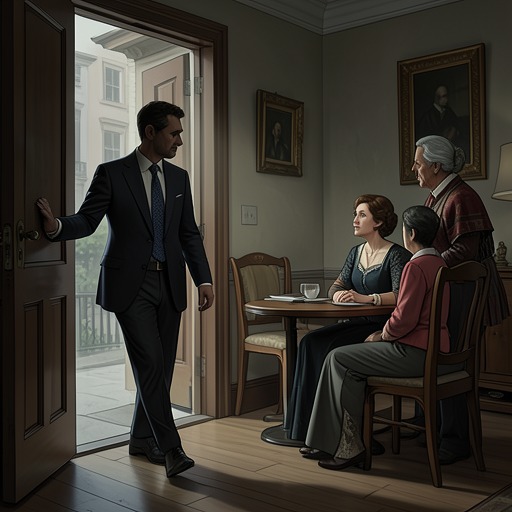
Tarık
The Museum of InnocenceTarık is Füsun’s father, known in the narrative chiefly through what others say about him. The evidence identifies him as a retired teacher and situates him in a family where Füsun is mindful of being a burden; it also links him indirectly to the secrecy surrounding her entry in a beauty contest. He does not appear directly in these episodes, so his own views and response remain unstated.
Identity and Family Circumstances
Füsun describes her father as a retired teacher when she explains why she took a job at the boutique: she had recently turned eighteen and did not want to be a burden. Her account connects Tarık’s occupation and retirement to her sense of responsibility, without specifying the family’s finances or suggesting that he had asked her to work.
The family connection is also evident during Kemal’s first encounter with Füsun at the boutique. As he leaves, Kemal asks her to pass on his respects to Nesibe and her father, but cannot remember Tarık’s name in time. The small lapse marks the distance between Kemal and Füsun’s family at this early point: Tarık is acknowledged as part of the household, yet remains personally unfamiliar to Kemal.
The Beauty Contest and Family Reputation
Kemal’s mother recalls that Nesibe entered Füsun in a beauty contest without informing her husband and lied about Füsun’s age. In this account, Tarık is the husband kept outside the decision; the narrative gives no direct explanation of what he knew, how he felt, or whether he later responded. The episode therefore establishes secrecy around the contest, not Tarık’s approval or opposition.
Kemal’s mother treats the contest as a potential source of public disgrace and worries that Füsun might have been expelled from school if the school had learned of it. She also interprets participation as evidence about Füsun’s sexual respectability, a judgment that Kemal recognizes as an insinuation. Tarık’s indirect place in this exchange connects him to the family stakes of the contest, while leaving the maternal accusations distinct from any view attributed to him.
Narrative Presence and Limits
Tarık’s characterization is built from brief references rather than scenes of his own. His retired-teacher status, Füsun’s wish not to burden him, and Nesibe’s concealment of the contest entry offer a limited picture of his family role, but do not establish his temperament, beliefs, or relationship with his daughter beyond those circumstances.
That absence matters to how he is presented: the reader encounters Tarık through Füsun’s explanation and Kemal’s mother’s account, while Kemal himself initially cannot recall his name. The narrative places him at the edge of consequential family matters without supplying his perspective, so conclusions about his reaction to Füsun’s work or the contest would go beyond the evidence.